

Moving to another country for work is exciting, but the paperwork behind it can feel overwhelming. If you are applying for an employment based visa, one requirement that often confuses applicants is document authentication. This is where the process of getting an Apostille for Employment Visa documents becomes essential. Whether you are a company sponsoring a foreign worker or an individual preparing your own file, understanding how authentication works will save you time, money, and unnecessary stress.
In this guide, we will walk through everything you need to know about securing an Apostille for Employment Visa paperwork, why it matters, which documents typically require it, and how to avoid the most common mistakes applicants make. By the end, you will have a clear roadmap for completing this step correctly the first time.
What Does Apostille Mean
An apostille is a certificate that verifies the authenticity of a public document so it can be recognized in another country. It confirms that the signature, seal, or stamp on a document is genuine. Countries that are part of the Hague Apostille Convention accept apostilled documents without requiring further legalization through an embassy or consulate.
When someone needs an Apostille for Employment Visa applications, they are essentially asking a designated authority, usually a Secretary of State office in the United States, to confirm that a document such as a diploma, background check, or corporate letter is legitimate. Once apostilled, that same document can be presented to immigration officials or employers abroad with confidence that it will be accepted.
Why Employment Based Visas Require Authentication
Employment based visas allow foreign nationals to live and work legally in a host country. Immigration authorities want assurance that every document submitted, from academic credentials to police clearance certificates, is authentic and has not been altered. This is precisely why an Apostille for Employment Visa documents is often mandatory rather than optional.
Without proper authentication, a visa application can be delayed, returned, or denied outright. Consular officers and immigration departments see thousands of applications, and any document that cannot be verified quickly becomes a red flag. Securing an Apostille for Employment Visa paperwork in advance demonstrates that the applicant is organized, serious, and prepared to meet legal standards.
Which Documents Typically Need An Apostille
Every employment-based visa case is different, but certain documents consistently require authentication. These commonly include:
- Educational diplomas and transcripts
- Professional licenses and certifications
- Criminal background checks or police clearance letters
- Birth certificates
- Marriage certificates, when a spouse is included in the application
- Corporate documents such as company registration or board resolutions
- Power of attorney letters used by employers or applicants
- Employment verification letters
If any of these documents are part of your employment-based visa file, you will likely need an Apostille for Employment Visa submission before the host country will accept them. Check the destination country’s specific requirements early, since some nations require additional certification beyond a standard apostille.
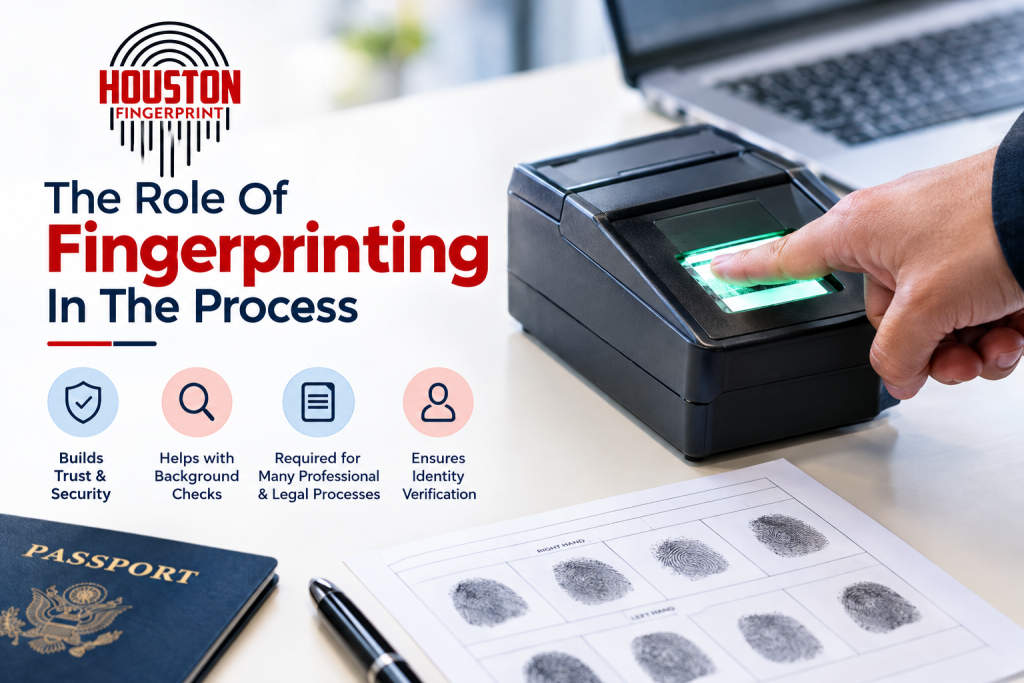
The Role Of Fingerprinting In The Process
Many employment-based visa applications also require background checks, and background checks often depend on fingerprinting. A criminal history report generated from fingerprint records is one of the most frequently apostilled documents in this category. Once your fingerprints are processed and a clearance letter is issued, that letter usually needs an Apostille for Employment Visa submission before it can be used internationally.
At Houston Fingerprint, we regularly assist clients who are preparing background check documents for exactly this purpose. Since fingerprinting is often the very first step, getting it done accurately and promptly sets the tone for the rest of the authentication journey. A rejected or smudged fingerprint card can create delays that ripple through every later stage, including the request for an Apostille for Employment Visa clearance letter.
Step By Step Process For Getting An Apostille
While procedures vary slightly depending on the state or country involved, the general path toward securing an Apostille for an employment visa document looks like this.
First, gather the original documents or certified copies. Many state offices will not apostille a document unless it is either an original or a certified copy issued by the relevant agency. Photocopies made at home typically will not qualify.
Second, have the document notarized if required. Some documents, such as employment verification letters or power of attorney forms, must be signed in front of a notary public before they can move forward. Skipping this step is one of the most common reasons an Apostille for Employment Visa request gets rejected.
Third, submit the notarized or certified document to the appropriate Secretary of State office, or in some cases a federal agency, depending on where the document originated. Each state has its own submission process, and processing times can range from a few days to several weeks.
Fourth, once the apostille is affixed, review the document carefully. Confirm that names, dates, and seals are correct. Errors at this stage can force applicants to restart the entire Apostille for Employment Visa process.
Fifth, send the apostilled documents to your employer, immigration attorney, or the receiving country consulate as instructed. Keep copies for your own records in case anything is questioned later.
Common Mistakes That Delay Approval
Even careful applicants run into avoidable problems. Here are mistakes we often see when people pursue an Apostille for an employment visa document.
Using outdated or expired background checks. Many countries require that clearance letters be issued within a set number of months before submission.
Submitting photocopies instead of certified originals. As mentioned earlier, most Secretary of State offices will refuse uncertified copies.
Forgetting notarization. Certain documents must be notarized first, and skipping this can send the entire Apostille for Employment Visa package back to the applicant.
Assuming every country accepts an apostille. Countries outside the Hague Apostille Convention require a different process called legalization, which involves the destination country embassy. Confusing these two paths wastes valuable time.
Ignoring processing timelines. Some applicants wait until the last minute, not realizing that an Apostille for Employment Visa request can take weeks depending on the state workload and document type.
Providing incorrect personal information. A misspelled name or wrong birth date on a fingerprint card or background check can cause the entire apostille to be rejected once discrepancies are noticed.
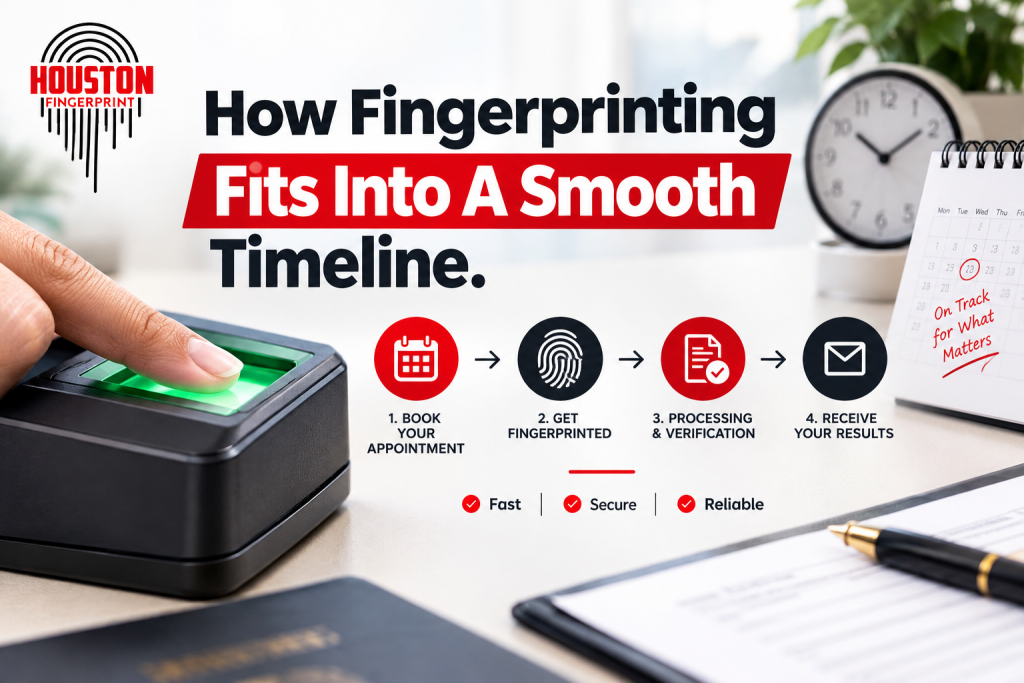
How Fingerprinting Fits Into A Smooth Timeline
Because fingerprinting often triggers the background check that later needs authentication, starting with accurate, professional fingerprinting services can prevent a chain reaction of delays. At Houston Fingerprint, our team is experienced in preparing FBI channeling reports, state background checks, and other fingerprint based documents that are frequently part of an Apostille for Employment Visa package.
We recommend clients think of the process in three phases. Phase one is fingerprinting and background check generation. Phase two is notarization, if needed. Phase three is submission for an Apostille for Employment Visa certificate. Handling these phases in order, rather than skipping ahead, keeps the entire timeline predictable.
How Long Does The Process Take
Timing depends on several factors including the state issuing the apostille, the type of document, and whether expedited service is available. In general, applicants should expect the entire Apostille for Employment Visa process, from fingerprinting to final certification, to take anywhere from one to six weeks. Expedited options exist in many states for an additional fee, and these can shorten turnaround to a few business days in some cases.
Because immigration timelines are often strict, it is wise to begin the Apostille for Employment Visa process as early as possible rather than waiting until a visa interview date is close. Employers sponsoring foreign workers should build this timeline into their overall hiring plan so new employees are not left waiting on paperwork.
Costs Associated With Authentication
Fees vary by state and document type, but applicants should budget for several potential costs. These often include notary fees, state apostille fees, courier or shipping charges if documents are mailed to a Secretary of State office, and fingerprinting fees if a background check is part of the package. While an Apostille for Employment Visa certificate itself is usually inexpensive, the surrounding steps such as notarization and expedited shipping can add up.
Working with a professional fingerprinting and document service can actually save money over time by reducing the risk of rejected submissions, which often require paying fees twice.
Tips For A Successful Application
A few practical habits make the Apostille for Employment Visa process far smoother.
Start early. Do not wait until your visa interview is scheduled to begin gathering documents.
Double check every detail. Names, dates of birth, and document numbers must match across every form submitted.
Keep digital and physical copies. Scan every document before mailing it, and keep the originals in a safe place.
Work with professionals who understand both fingerprinting and apostille requirements. A knowledgeable provider can flag potential issues before they cause delays.
Confirm destination country requirements. Some countries request translations alongside an Apostille for Employment Visa document, especially if the original is not in the local language.
Track your submission. Many Secretary of State offices offer tracking numbers or status checks so you are not left guessing where your documents are in the pipeline.
Employment Visa Categories That Often Need Authentication
Different countries use different labels for employment based visas, but several categories consistently show up when clients ask us about the Apostille for Employment Visa process. In the United States, employers sponsoring foreign talent often deal with categories such as H1B specialty occupation visas, L1 intracompany transfer visas, and E2 treaty investor visas. Each of these may call for background checks, educational verification, or corporate documentation that later needs an Apostille for Employment Visa certificate before it can be used overseas.
On the flip side, when a foreign national is coming into the United States for work, the receiving employer or attorney may request that documents issued abroad go through a similar authentication step in the country of origin. This two-way nature of employment-based immigration is exactly why understanding the Apostille for Employment Visa requirement matters no matter which direction you are moving.
Countries That Recognize The Hague Apostille Convention
More than one hundred countries currently participate in the Hague Apostille Convention, which means a single Apostille for Employment Visa certificate issued in a member country will be accepted in any other member country without additional legalization. Nations such as the United Kingdom, Germany, Japan, Australia, and Mexico are part of this group, along with the United States.
If the destination country for your employment based visa is not part of the convention, the process changes. Instead of a simple Apostille for Employment Visa certificate, you will need to pursue consular legalization, which typically involves an extra layer of review at the destination country embassy or consulate. Knowing in advance whether your target country belongs to the Hague group can save weeks of planning and prevent last minute surprises.
A Closer Look At Background Check Documents
Background checks deserve special attention because they are so frequently part of an Apostille for Employment Visa package. There are generally two paths for obtaining a background check in the United States. The first is a state level check, usually run through a state police agency or a state repository. The second is a federal level check, often called an FBI identity history summary, which is generated through fingerprint submission.
For employment based visa purposes, many countries specifically request the federal level report because it searches across national records rather than a single state. This report must be requested directly from the FBI or through an approved channeling agency, and once issued, it becomes eligible for an Apostille for Employment Visa certificate through the United States Department of State rather than an individual state office. This distinction trips up many applicants who assume every apostille request goes through the same office.
Why Professional Fingerprinting Matters So Much
It is tempting to think of fingerprinting as a minor formality, but errors at this stage cause more delays than almost any other part of the Apostille for Employment Visa journey. Smudged prints, incorrect card formats, or missing personal information can result in a rejected submission from the FBI or state agency, forcing applicants to start the background check process over again.
At Houston Fingerprint, our technicians are trained to capture clean, properly formatted prints on the first attempt, whether you need an ink card, a livescan submission, or an FBI approved channeler format. Getting this right the first time keeps your entire Apostille for Employment Visa timeline on track and avoids the frustration of repeated visits.
A Sample Timeline For Planning Purposes
To help applicants visualize the process, consider a typical example. In week one, the applicant completes fingerprinting and requests a background check. In week two or three, the background check is issued and, if necessary, notarized. In week four, the document is submitted for an Apostille for Employment Visa certificate through the relevant state or federal office. By week five or six, the apostilled document is returned and ready to send to the employer, attorney, or receiving country consulate.
Of course, every situation is unique, and some applicants move faster while others encounter unexpected delays. Building in extra buffer time, especially around holidays or peak immigration seasons, is a smart strategy when planning your own Apostille for Employment Visa timeline.
Working With Employers And Immigration Attorneys
Large employers who regularly sponsor foreign workers often develop internal checklists to manage the Apostille for Employment Visa process for multiple employees at once. Coordinating with an immigration attorney can be especially helpful, since attorneys are familiar with the specific document requirements of each destination country and can flag issues before submission.
If you are an individual applicant without an attorney, do not hesitate to contact the receiving country embassy or consulate directly to confirm exactly which documents require an Apostille for Employment Visa certificate. Requirements can change, and getting current guidance directly from the source is always safer than relying on outdated information found online.
Preparing Documents For A Spouse Or Dependents
Many employment based visa applications include family members, and dependents often need their own set of authenticated paperwork. Marriage certificates, birth certificates for children, and sometimes even school records may require the same authentication treatment as the primary applicant documents. If your case includes a spouse or children, it is worth reviewing the destination country checklist early so you can plan fingerprinting appointments and document gathering for the whole family at once rather than handling each person separately, which tends to stretch out the overall timeline and add avoidable stress during an already demanding relocation process.
Choosing The Right Fingerprinting Partner
Not every fingerprinting provider is equally prepared to support employment based immigration cases. Look for a location experienced with FBI approved channeling, livescan technology, and ink card submissions, since different states and destination countries prefer different formats. A knowledgeable provider will also explain what happens after fingerprinting, including how the resulting background check fits into the broader authentication and visa submission process, so you are never left wondering what step comes next.
Frequently Asked Questions
Do all employment based visas require an apostille
Not every visa category requires the same documents, but most employment based visas involve at least one document that needs an Apostille for Employment Visa certification, particularly background checks and educational credentials.
Can I get an apostille without a background check
Yes, if your specific application does not require a criminal history report. However, many employment based visa categories do require background checks, which means fingerprinting typically comes first.
How long is an apostille valid
An apostille itself does not expire, but the underlying document might. For example, a background check apostilled six months ago may be considered outdated by immigration officials even though the apostille itself remains technically valid. This is a common point of confusion when preparing an Apostille for an Employment Visa package.
What happens if my apostille has an error
You will need to have the document corrected and resubmitted for a new Apostille for Employment Visa certificate. This is why reviewing every detail before submission is so important.
Can Houston Fingerprint help with the entire process
While our specialty is fingerprinting and background check preparation, we can guide clients on the general steps involved in securing an Apostille for Employment Visa document and help ensure the fingerprint based portion of the file is accurate and complete.
Final Thoughts
Navigating the requirements for an employment based visa can feel like a maze, especially when authentication rules differ by country and document type. Understanding the purpose and process behind an Apostille for Employment Visa certificate takes away much of the guesswork. By starting early, working with experienced professionals, and double checking every detail, applicants can avoid the delays that so often derail immigration timelines.
At Houston Fingerprint, we understand how stressful this process can be for both individual applicants and the employers sponsoring them. From accurate fingerprinting to guidance on background check preparation, our team is here to help make the path toward an Apostille for Employment Visa certificate as smooth as possible. If you are preparing for an employment-based visa and need reliable fingerprinting services, reach out to our team today and take the first confident step toward your new opportunity abroad.