

Moving through the immigration system in the United States involves many layers of paperwork, verification, and patience. Among the most important of these steps is the FBI background check for immigration, a process that confirms whether an applicant has any criminal history on record at the federal level. For residents of Houston who are applying for a visa, a green card, naturalization, or another immigration benefit, understanding this requirement can save weeks of delay and unnecessary stress. This guide walks through everything you need to know about the FBI background check for immigration, including why it matters, how it works, what documents are required, and how a local Houston fingerprinting service can make the entire process smoother.
What Is an FBI Background Check for Immigration
An FBI background check for immigration is a records search conducted through the Federal Bureau of Investigation that reviews an applicant’s criminal history using their fingerprints. Unlike a state level background check, which only searches records within a single state, this type of check pulls from a national database that includes arrests, convictions, and other criminal justice information reported by agencies across the country. United States Citizenship and Immigration Services, along with consulates and embassies abroad, frequently requires this type of check before approving visas, adjustment of status applications, or naturalization petitions.
The FBI background check for immigration is considered one of the most reliable tools available to immigration officers because it is tied directly to an individual’s fingerprints rather than just a name or date of birth. Names can be shared by many people, but fingerprints are unique to each person. This is why nearly every serious immigration filing in the United States, including those processed through USCIS, the State Department, or even certain employment based visa categories, will ask for fingerprint based clearance at some point in the review process.
Why Houston Applicants Need This Check
Houston is home to one of the largest and most diverse immigrant populations in the country. With major employers in energy, medicine, technology, and shipping all relying on international talent, the demand for immigration services in this city remains high year round. Whether someone is applying for an employment visa, a fiance visa, a green card through marriage, or naturalization after years of permanent residency, the FBI background check for immigration is almost always part of the required documentation.
Local applicants benefit from working with a Houston based fingerprinting provider because the process can be completed quickly and accurately, reducing the chance of rejected submissions. A fingerprint card that is smudged, incomplete, or improperly formatted can cause significant delays, sometimes pushing an immigration case back by several weeks. Choosing a professional service that understands the specific requirements of the FBI background check for immigration helps applicants avoid these common pitfalls.
How the FBI Background Check for Immigration Process Works
The process generally begins with fingerprinting. Applicants visit a certified fingerprinting location, such as a licensed Houston provider, where their fingerprints are captured either digitally or on a standard FD 258 card. These prints are then submitted to the FBI Criminal Justice Information Services Division, often referred to as CJIS, for processing.
Once received, the FBI compares the submitted fingerprints against its national criminal history database. If there is a match, details of any arrests or convictions are compiled into a report. If there is no match, the applicant typically receives a clean record result, often called a no record response. This entire process can take anywhere from a few days to several weeks depending on submission method, accuracy of the prints, and current processing volume at the FBI.
For immigration purposes specifically, this report is then forwarded to USCIS, an embassy, or another relevant agency as part of the broader application file. The FBI background check for immigration does not approve or deny a case by itself, but it provides immigration officers with the criminal history information they need to make an informed decision.
Step by Step Breakdown of the Process
Understanding each stage of the FBI background check for immigration can help applicants plan ahead and avoid mistakes.
First, applicants must determine which type of submission is required. Some immigration petitions request an FBI Identity History Summary, sometimes called a rap sheet, while others request fingerprint based clearance submitted directly through a designated channel. Knowing which one your case requires is essential before scheduling an appointment.
Second, applicants schedule a fingerprinting appointment with a certified provider. In Houston, many fingerprinting services offer same day appointments, walk in availability, or online scheduling for added convenience.
Third, the fingerprints are captured using either ink based cards or electronic livescan technology, depending on what the receiving agency accepts. Livescan tends to produce cleaner results and reduces the likelihood of rejected submissions, which is especially valuable for time sensitive immigration cases.
Fourth, the completed fingerprint submission is sent to the FBI for processing. Applicants may choose to have results mailed to them directly or sent electronically depending on the request type.
Fifth, once the FBI background check for immigration results are received, they are submitted alongside other required documents to USCIS, a consulate, or another relevant authority as part of the full immigration application package.
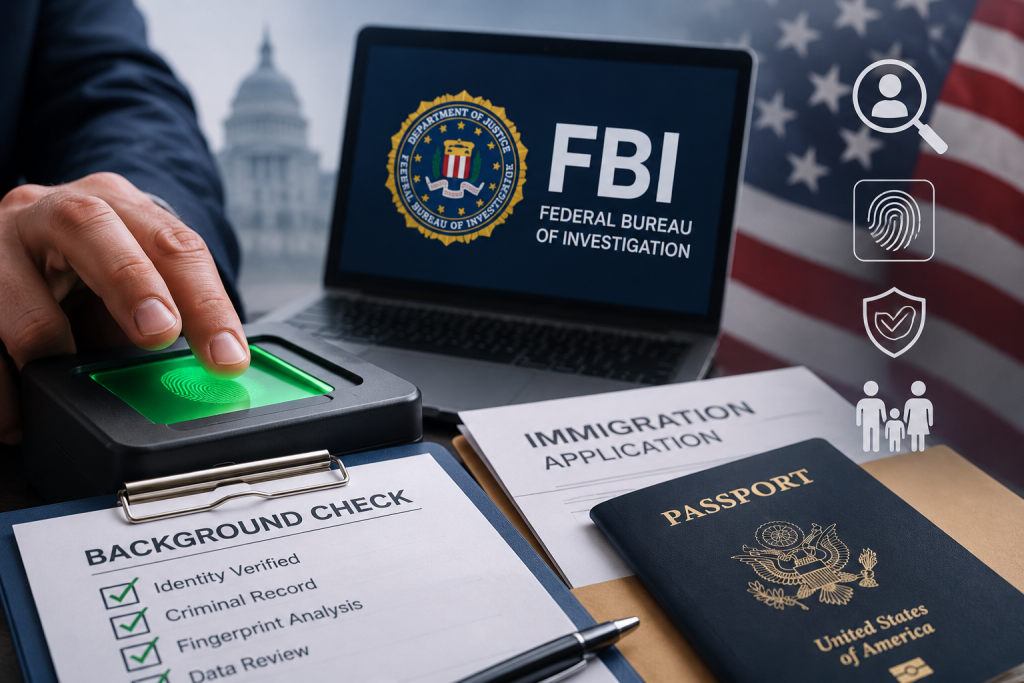
Common Documents Required Alongside the Check
In addition to the fingerprint results themselves, most immigration applications require several supporting documents. These often include a valid passport or government issued identification, proof of current address, immigration petition forms specific to the visa category being requested, and any prior immigration history documentation such as previous visa approvals or denials.
Some consulates also request that the FBI background check for immigration be accompanied by an apostille or authentication, particularly for cases being processed outside the United States. This additional step verifies that the document is legitimate and was issued by a recognized United States authority. Applicants planning to use their results internationally should ask their fingerprinting provider whether apostille services are available locally, since this can save an extra trip to a state authentication office.
Typical Processing Times
Processing times for the FBI background check for immigration vary depending on the submission method chosen. Standard mail submissions to the FBI can take three to six weeks, while electronic submissions through approved channel partners are often completed in a matter of days. Applicants working under strict immigration deadlines, such as those tied to consular interview dates or visa expiration timelines, should strongly consider electronic submission whenever it is available.
Houston fingerprinting providers that specialize in immigration related services often have direct experience helping clients choose the fastest appropriate option for their specific case. This local expertise can be the difference between a smooth, timely application and one that gets delayed due to processing backlogs.
Why Accuracy Matters So Much
A rejected fingerprint submission is one of the most common reasons immigration cases experience delay. The FBI background check for immigration depends entirely on clear, properly captured fingerprints. Poor quality prints, whether from ink smudging, incorrect finger placement, or worn ridge detail, can result in an automatic rejection from the FBI, requiring the applicant to start the process over again.
This is why choosing an experienced fingerprinting technician matters so much. A trained professional understands proper finger rolling technique, correct pressure application, and how to capture prints even for individuals with naturally faint ridge patterns due to age, occupation, or skin condition. Houston residents who choose a reputable local provider significantly reduce their risk of rejection and the resulting delay to their FBI background check for immigration.
How Houston Fingerprint Services Support Immigration Applicants
A dedicated fingerprinting business plays a much larger role in the immigration process than many applicants realize. Beyond simply capturing prints, an experienced provider can guide clients through which type of submission their specific visa category requires, help complete required forms correctly, and ensure that results are formatted in a way that immigration authorities will accept without issue.
Many Houston providers also offer notary services, passport photos, and document authentication under one roof, allowing applicants to complete several immigration related tasks in a single visit. This convenience matters greatly for busy professionals, families managing multiple petitions at once, or individuals working against tight consular deadlines. When every step of the FBI background check for immigration process is handled correctly the first time, applicants save both money and valuable time.
Common Mistakes to Avoid
One of the most frequent errors applicants make is submitting fingerprints through an uncertified provider who does not follow FBI formatting standards. This often results in automatic rejection. Another common mistake is failing to confirm exactly which type of background check a particular visa category requires, since immigration petitions are not all identical in their documentation needs.
Applicants also sometimes wait until the final weeks before a deadline to begin the FBI background check for immigration process, leaving little room for error if a resubmission becomes necessary. Starting early, ideally as soon as a fingerprinting requirement is identified in an immigration petition, gives applicants the flexibility to correct any issues without jeopardizing their case timeline.
Who Typically Needs This Check
A wide range of immigration cases require the FBI background check for immigration. These include family based green card petitions, employment based visa categories, fiance visas, naturalization applications, asylum cases, and certain nonimmigrant visa categories requested by specific consulates. Even individuals adjusting status from within the United States may be asked to provide fingerprint based clearance as part of their biometrics appointment with USCIS.
Because requirements differ depending on the specific visa or benefit being sought, applicants are encouraged to read their petition instructions carefully or consult with an immigration attorney to confirm exactly what type of background documentation is needed before scheduling a fingerprinting appointment.
Cost Considerations
Pricing for the FBI background check for immigration process typically includes a fingerprinting capture fee charged by the local provider, along with a separate processing fee paid to the FBI or its approved channeling agent. While exact costs vary, Houston applicants can generally expect a combined total that remains affordable compared to potential delays caused by rejected submissions or missed deadlines.
Choosing a provider that offers transparent, upfront pricing helps applicants budget accurately for this portion of their overall immigration expenses. Many providers also offer bundled services, combining fingerprinting with notary work or photo services, which can further reduce overall costs for applicants managing multiple requirements at once.
Frequently Asked Questions
How long does an FBI background check for immigration usually take?
Processing time depends on submission method, ranging from a few days for electronic channels to several weeks for standard mail requests.
Can I complete my FBI background check for immigration entirely in Houston?
Yes. Most applicants can complete fingerprinting locally, with results submitted electronically or by mail depending on the requesting agency.
Do all visa categories require this type of background check?
Most do, though specific requirements vary by visa type and by the consulate or agency reviewing the application.
What happens if my fingerprints are rejected?
You will typically need to schedule a new appointment to resubmit clean prints, which can add additional processing time to your case.
Is an apostille always required for the FBI background check for immigration?
Not always. It depends on whether the document will be used within the United States or submitted to a foreign consulate or authority.
Final Thoughts
The FBI background check for immigration is a foundational piece of nearly every visa, green card, and naturalization case processed in the United States. For Houston applicants, working with an experienced local fingerprinting provider can make the difference between a smooth, on-time submission and a frustrating cycle of delays caused by rejected prints or incomplete documentation.
By understanding the process, gathering the right supporting documents, and starting early, applicants can move through this requirement with confidence and keep their broader immigration case on track. Whether you are applying for your first visa or completing the final steps toward citizenship, taking the time to get your FBI background check for immigration right the first time is one of the smartest steps you can take in your immigration journey.